
Lesson Plan
Ohio Content Standards:
Grade 9, Economics 2; Grade 10, History 1; Grade 12, Citizenship Rights and Responsibilities 7
Duration of Lesson:
Two class periods
Learning Objectives:
Students will analyze editorial cartoons that will enable them to explain the abuses of big business and determine the effects of their abuses.
Students will identify the role of labor unions in American society.
Students will be able to understand the role of government in the free enterprise system.
Summary:
This lesson allows students to explore the relationship between big business, organized labor and government through editorial cartoon analysis and research.
Materials:
Copies of editorial cartoons 1-4 at bottom of this page
Discussion questions (if necessary)
Pre-Assessment:
The instructor will facilitate a discussion on modern day market economies and the global corporations that thrive within this economy (Wal-Mart, Microsoft, McDonald's etc.). To encourage such discussion teachers can use supplemental materials such as newspaper articles and documentaries.
Instructional Steps:
Day 1
Provide each student with a copy of editorial cartoons 1 and 2 (Next and The King of the Combinations).
As a class discuss the content of the cartoons. Ask students to identify the businesses symbolized in the cartoons and discuss the message of the cartoonist.
Put students into small groups and have them brainstorm a list of other big business that may have been targets of cartoonists.
Assign each small group an industry leader to research (below is a list of suggested individuals).
- Cornelius
- Vanderbilt (railroad)
- Jay Gould (railroad)
- Andrew Carnegie (steel)
- John D. Rockefeller (oil)
- J.P. Morgan (finance)
- Henry Ford (automobiles)
- John Jacob Astor (real estate)
- Jay Cooke (railroads)
- James Buchanan Duke (tobacco)
Take groups to a computer lab or the media center to research the assigned individual and that individual's business.
Day 2
Groups meet in class to prepare a summary of their research.
Each group shares its findings with the class.
As a class, discuss the effects big business had on the average citizen. Remind students of the negative political cartoons they viewed on day 1. Some discussion questions might include:
- Why did people react negatively to big business?
- Who was adversely affected by big business and in what way?
- What did people do in response to the adverse effects of big business?
- What organized group became the biggest opponent to big business?
After students are able to recognize the struggle between big business and organized labor, ask students how disputes between these two groups might be settled. Allow them to brainstorm a response in their small groups.
Discuss their responses to determine if students were able to determine the role of government in solving disputes.
Provide small groups with cartoons 3 and 4 and ask them to determine what the message of the cartoon is and how the cartoons portray the government's role in solving disputes.
Post-Assessment:
Students research government policy passed in response to big business and labor disputes. In a writing assignment, they should describe at least three policies and discuss the effectiveness of the policy/legislation.
Extension Activities:
- Have student groups research and write a summary on the rise of labor unions.
- Have students research and define the terms "robber barons" and "captains of industry" and write an essay explaining the term they believe is appropriate to use in labeling the individuals discuss in this lesson.
Cartoons:
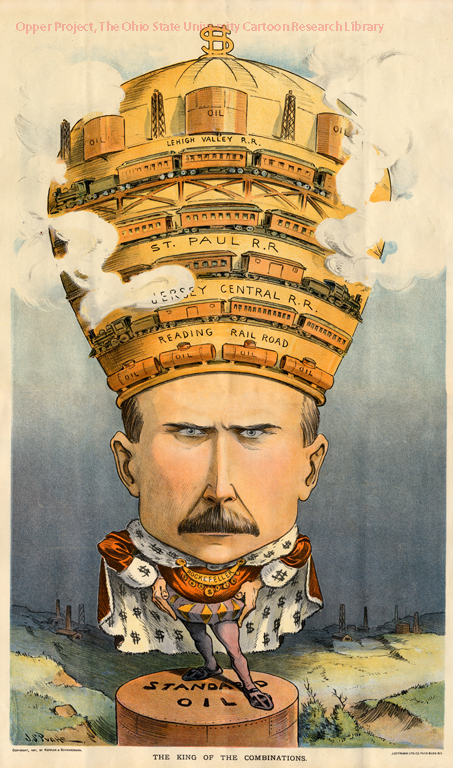
The King of the Combinations
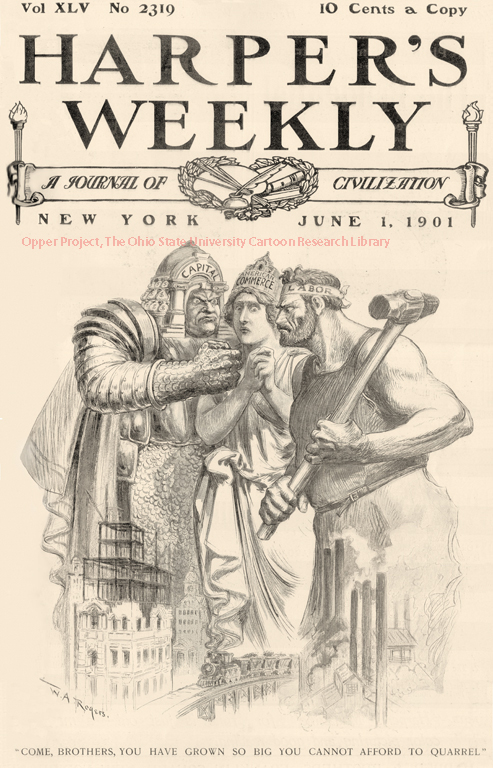
Come, Brothers, You Have Grown So Big You Cannot Afford to Quarrel
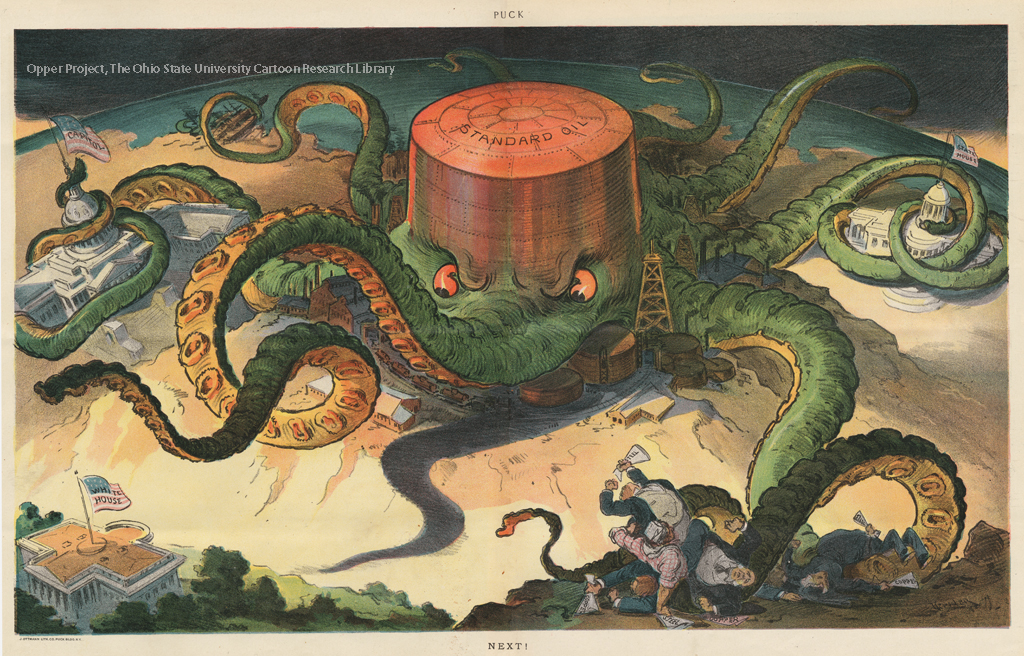
Next!
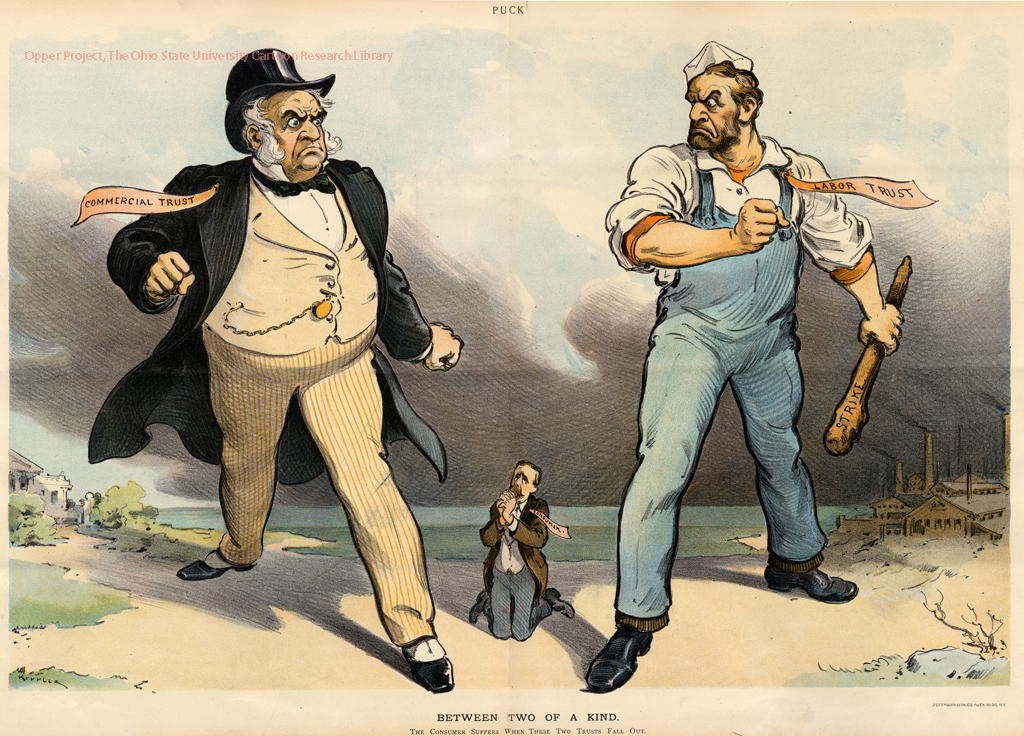
Between Two of a Kind: The Consumer Suffers When These Two Trusts Fall Out